Mostrando entradas con la etiqueta tESTED SUPER-8 CAMERAS. Mostrar todas las entradas

sábado, 29 de agosto de 2026

KODAK SUPER 8: NEW PROFESSIONAL MKII BASE. Nueva base MKII Profesional.

(En español, al final) 

My friend César Ballesteros, small business owner --which is no small feat, considering how tough it is to make a living as a freelancer in Spain),  of TESTED SUPER8 CAMERAS, has given me an exclusive for readers of this blog on one of the new products he will officially launch next week: the new MKII base for the Kodak Super 8 Camera. The accessory has been jointly developed by Scandinavian filmmaker Sune Eskelinen and  TESTED SUPER8 CAMERASin Spain. Regular readers of this blog will immediately recognise Sune's name: he owns the unusual Fujica ZC1000N (a rare postproduction version), that recently travelled all the way from Scandinavia to the Mr Xerox Fuji workshop in Galicia (NW, of Spain) to have a light leak corrected and its picture steadiness improved. This time, however, Sune and César have turned their attention to a radically different and much more recent camera: the new Kodak Super 8.


FROM A CAMERA TO A SYSTEM.

The new MKII base is an evolution of an earlier design and has been conceived to transform the Kodak into the heart of a genuine filmmaking system. There is one detail César particularly emphasises: none of its structural components is made using 3D printing. The base is completely machined from 6082 aluminium and finished in black anodising.

At a time when it is tempting to solve almost any small-production accessory by resorting to 3D printing, Tested Super 8 Cameras has chosen the more expensive and complicated route: traditionally machined aluminium and construction intended to withstand real filmmaking use. The MKII base accepts 15 mm rods and complies with the professional standard of 85 mm between the centre of the rods and the optical axis. One important improvement over the previous version is that the 15 mm rods can now pass all the way through the base.

This makes it possible to integrate the Kodak with accessories commonly found on a professional camera rig: an external monitor, wireless transmitters, audio or video recorders, amongst others. Provision has even been made for an HDMI cable clamp, preventing an accidental pull from disconnecting the cable when recording to an external device.


A GRIP THAT HAD TO COME OFF IN SECONDS.

One problem with building any cage around a Super 8 camera is as elementary as it is unavoidable: approximately every three minutes, the camera has to be opened and the cartridge changed. There would be little point in constructing a formidable professional rig around the Kodak if half the camera then had to be dismantled every time those fifteen metres of film came to an end.

The MKII solves this problem with a wooden right-hand grip incorporating an electric shutter release. The grip is attached by means of a quick-release system specifically designed so that it can be removed instantly, leaving the camera door unobstructed for a cartridge change. Between the wooden grip and the quick-release mechanism is a double ARRI rosette, allowing the grip to be positioned according to the operator's requirements.

On the left-hand side there is a further 32 mm ARRI rosette, ready to accept any accessory using this mounting system. Immediately below the lens there are also two 1/4-inch threaded mounting points, spaced 18 mm apart, allowing various accessories to be fitted, including, for example, a bridge for 19 mm rods.


THE ORIGINAL KODAK GRIP IS RETAINED!

For me, this is one of the most ingenious solutions in the entire assembly. The Kodak's original grip is not condemned to remain in a case once the MKII is installed. It can be attached beneath the new base, with its electrical connections transmitted through to the camera.

The filmmaker can therefore continue using the original grip and its shutter release even with the camera installed on the base, retaining the possibility of handheld shooting. It is a good demonstration that the MKII is not intended to modify the Kodak or replace its original ergonomics, but rather to extend its possibilities.


A MATTE BOX LIKE THE ONES WE USED TO KNOW.

The system does not end with the base. Sune Eskelinen and Tested Super 8 Cameras have also developed a matte box specifically adapted to the Kodak Super 8, compatible both with the new MKII and with the previous version of the base.

Here we find another detail that I particularly like. This is not simply a box placed in front of the lens to keep stray light away. It is a traditional bellows-type matte box, immediately reminiscent of the professional cine equipment of old.

It likewise complies with the 85 mm distance between the centre of the rods and the optical axis and uses an EWA matte box with an exclusive support machined from aluminium and black anodised. The assembly can be adjusted both vertically and laterally to obtain correct alignment with the lens.

But the most entertaining feature is that it comes with twelve masks, including a glass, making it possible to rediscover some of those effects once created directly in front of the lens during filming, back when special effects did not require a computer. The matte box also includes rear cover rings, two additional plates to extend the system, and its corresponding aluminium bridge for the rods.


WHAT IS INCLUDED WITH THE MKII BASE?

The base assembly is supplied with:

— MKII base/cage.
— Two cheese plates.
— Stainless-steel screw for securing the camera and holding the original Kodak grip from underneath.
— Right-hand wooden grip with electric shutter-release button.
— Two brackets/bridges for 15 mm rods.
— Two cold-shoe adapters, one flat and one at 90 degrees.
— T-handle screwdriver.
— 4 mm Allen key.

Without the camera, its dimensions are 18.5 cm long, 9.5 cm wide and 16 cm high. The base fitted with its cheese plates and rod brackets weighs 1,230 grams, whilst the wooden grip adds a further 260 grams.

This is therefore not an ultralight accessory. Nor is it intended to be. It is an aluminium structure conceived to turn the Kodak into a much more complete and robust filmmaking configuration.


THE MATTE BOX.

The second component of the system includes:

— EWA matte box.
— Exclusive aluminium-machined, black-anodised support, adjustable vertically and laterally.
— Twelve masks, including glass.
— Rear cover rings.
— Two additional plates to extend the system.
— Aluminium rod bridge.
— Allen key.
— Matte box instructions.
— Original EWA packaging.


PRICE AND AVAILABILITY.

According to the information César Ballesteros has provided to me ahead of its official launch, the new MKII base will be priced at €1,275, including worldwide shipping from Spain.

Its reference will be KODAKB-MKII.

The matte box will cost €289, also including worldwide shipping, with the reference KODAK-MB. The first production run will be genuinely limited: initially, only three units of each product will be available.

We are, of course, looking at a highly specialised accessory, but in the correct price. It is also significant that, more than two years after the arrival of the new Kodak Super 8 Camera, small manufacturers are still prepared to invest their time, expertise and precision machining in developing accessories for a film camera. Perhaps that is the most interesting aspect of this exclusive.

Kodak built a new Super 8 camera in the twenty-first century. Now it is small specialists such as Sune Eskelinen and César Ballesteros who, from Finland and Spain, are continuing to develop around it something that veterans of photochemical filmmaking know very well: not simply a camera, but an entire filmmaking system.


KODAK SUPER 8: NUEVA BASE MKII PROFESIONAL.

Mi amigo César Ballesteros, propietario de Tested Super 8 Cameras (todo un mérito, en España, con lo díficil que es sacar adelante, y mantenarlas, las pequeñas empresas), me ha confiado en exclusiva para los lectores de esta bitácora una de las novedades que presentará oficialmente la próxima semana: la nueva base MKII para la cámara Kodak Super 8.

El accesorio ha sido desarrollado conjuntamente por el cineísta escandinavo Sune Eskelinen y Tested Super 8 Cameras, en España. Los lectores habituales de esta bitácora reconocerán inmediatamente el nombre de Sune: es el propietario de la singular Fujica ZC1000N que recientemente llegó desde Escandinavia al taller de Mr. Xerox Fuji para solucionar una entrada de luz y un problema de estabilidad.

Esta vez, sin embargo, Sune y César han puesto su atención en una cámara radicalmente distinta y mucho más reciente: la nueva Kodak de Super 8.


DE UNA CÁMARA A UN SISTEMA.

La nueva base MKII es la evolución de un primer diseño y ha sido concebida para transformar la Kodak en el centro de un auténtico sistema de rodaje. Hay un detalle en el que César insiste especialmente: no existe ninguna pieza estructural realizada mediante impresión 3D. La base está completamente mecanizada en aluminio 6082 y terminada mediante anodizado negro.

En una época en la que resulta tentador solucionar cualquier accesorio de pequeña producción recurriendo a la impresión 3D, Tested Super 8 Cameras ha preferido aquí el camino más caro y complicado: mecanizado tradicional de aluminio y fabricación pensada para soportar un uso cinematográfico real.

La base MKII admite barras de 15 mm y respeta el estándar profesional de 85 mm entre el centro de las barras y el eje óptico. Una importante mejora respecto a la versión anterior es que ahora las barras de 15 mm pueden atravesar longitudinalmente toda la base.

Esto permite integrar la Kodak con accesorios habituales en un equipo de rodaje: monitor externo, transmisores inalámbricos, grabador de audio o de vídeo, entre otros. Incluso se ha previsto la posibilidad de instalar una abrazadera para el cable HDMI, evitando que una tracción accidental pueda desconectarlo mientras se utiliza un grabador externo.


UNA EMPUÑADURA QUE HABÍA QUE PODER QUITAR EN SEGUNDOS.

Uno de los problemas que plantea cualquier jaula para una cámara Súper-8 es algo tan elemental como inevitable: cada tres minutos, aproximadamente, hay que abrir la cámara y cambiar el cartucho. De nada serviría construir alrededor de la Kodak una formidable estructura profesional si después hubiese que desmontar media cámara cada vez que se agotan los quince metros de película.

La MKII resuelve el problema mediante una empuñadura de madera para la mano derecha dotada de disparador eléctrico. La empuñadura se fija mediante un sistema de liberación rápida diseñado específicamente para poder retirarla instantáneamente y dejar libre la puerta de la cámara durante el cambio de cartucho. Entre la empuñadura y el mecanismo de liberación se encuentra una doble roseta ARRI, que permite ajustar su posición a las necesidades del operador.

En el lateral izquierdo se ha dispuesto otra roseta ARRI de 32 mm, preparada para instalar cualquier accesorio compatible con este sistema. Debajo del objetivo encontramos además dos roscas de 1/4 de pulgada separadas 18 mm, que permiten montar diferentes accesorios e incluso, por ejemplo, un puente para barras de 19 mm.


¡Y SE CONSERVA LA EMPUÑADURA ORIGINAL KODAK!

Esta es, en mi opinión, una de las soluciones más ingeniosas del conjunto. La empuñadura original de la Kodak no queda condenada a permanecer guardada en una maleta cuando se instala la MKII. Puede fijarse en la parte inferior de la nueva base y las conexiones eléctricas se transmiten hasta la cámara.

De esta manera, el cineísta puede continuar utilizando la empuñadura original y su disparador, incluso con la cámara instalada en la base, manteniendo la posibilidad de trabajar cámara en mano. Es una buena demostración de que la MKII no pretende modificar la Kodak ni sustituir su ergonomía original, sino ampliar sus posibilidades.


UNA MATTE BOX COMO LAS DE ANTES.

El sistema no termina en la base. Sune Eskelinen y Tested Super 8 Cameras han desarrollado también una matte box específicamente adaptada a la Kodak Super 8, compatible tanto con esta nueva MKII como con la anterior versión de la base.

Aquí aparece otro detalle que me gusta especialmente. No se trata simplemente de colocar delante del objetivo una caja para evitar luces parásitas. Es una matte box de fuelle, de concepción clásica, que recuerda inmediatamente a los equipos cinematográficos profesionales de toda la vida.

Respeta igualmente los 85 mm entre el centro de las barras y el eje óptico y utiliza una matte box EWA con un soporte exclusivo mecanizado en aluminio y anodizado en negro. El conjunto puede regularse tanto vertical como lateralmente para conseguir una correcta alineación con el objetivo.

Pero lo mejor de toda esta historia es que se suministra con doce máscaras, incluyendo un cristal, lo que permite recuperar ante el objetivo algunos de aquellos trucajes que se realizaban directamente durante la filmación, cuando los efectos especiales no necesitaban un ordenador.

La matte box incluye también anillos posteriores, dos placas adicionales para ampliar el sistema y su correspondiente puente de aluminio para las barras.

¿QUÉ INCLUYE LA BASE MKII?

El conjunto de la base se suministra con:

— Base/cage MKII.
— Dos cheese plates.
— Tornillo de acero inoxidable para fijar la cámara y sujetar desde abajo la empuñadura original Kodak.
— Empuñadura de madera derecha con pulsador eléctrico de disparo.
— Dos soportes/puentes para barras de 15 mm.
— Dos adaptadores cold shoe, uno plano y otro a 90 grados.
— Destornillador en T.
— Llave Allen de 4 mm.

Sin cámara, sus dimensiones son 18,5 cm de longitud, 9,5 cm de anchura y 16 cm de altura. La base equipada con sus cheese plates y soportes para barras pesa 1.230 gramos, mientras que la empuñadura de madera añade otros 260 gramos.

No estamos, por tanto, ante un accesorio ultraligero, ni pretende serlo. Es una estructura de aluminio concebida para convertir la Kodak en una configuración de rodaje mucho más completa y robusta.

LA MATTE BOX.

El segundo elemento del sistema incluye:

— Matte box EWA.
— Soporte exclusivo mecanizado en aluminio y anodizado en negro, regulable vertical y lateralmente.
— Doce máscaras, incluido cristal.
— Anillos de cierre posteriores.
— Dos placas adicionales para ampliar el sistema.
— Puente de aluminio para las barras.
— Llave Allen.
— Instrucciones.
— Embalaje EWA original.

PRECIOS Y DISPONIBILIDAD.

Según la información que me facilita César Ballesteros antes de su lanzamiento oficial, la nueva base MKII tendrá un precio de 1.275 euros, con los gastos de envío internacional desde España incluidos.

Su referencia será KODAKB-MKII.

La matte box tendrá un precio de 289 euros, también con envío internacional incluido, y la referencia KODAK-MB.

La primera serie será verdaderamente limitada: inicialmente habrá solamente tres unidades disponibles de cada producto. Estamos, naturalmente, ante un accesorio muy especializado con el precio correcto. Pero también resulta significativo que, más de dos años después de la llegada al mercado de la nueva Kodak Super 8, sigan apareciendo pequeños fabricantes dispuestos a invertir tiempo, conocimientos y mecanizado de precisión en desarrollar accesorios para una cámara de película.  Ello, quizá sea lo más interesante de esta exclusiva.

Kodak fabricó una nueva cámara de Súper-8 en pleno siglo XXI. Ahora son pequeños especialistas como Sune Eskelinen y César Ballesteros quienes desde donde Europa empieza y termina, desde Finlandia y España, continúan desarrollando alrededor de ella algo que los veteranos del cine fotoquímico conocemos muy bien: no simplemente una cámara, sino todo un sistema cinematográfico.

domingo, 22 de junio de 2025

NEW!!! LATEST DEVELOPMENTS FROM TESTED SUPER8 CAMERAS: WHEN TECHNICAL INGENUITY SERVES CINEMATIC PASSION

One of the things that continues to fascinate me about the Super 8 universe — and I say this after all my life immersed in it — is that even now, deep into the 21st century, real innovation continues to emerge. 


Not only from massive corporations as Kodak, but from small firms and passionate technicians who keep the flame of analog storytelling alive, pushing this narrow-gauge format to levels we could hardly have dreamed of a few years ago.

Among these dedicated forces, one name stands out: TESTED SUPER8 CAMERAS, previously known as CBD, an acronym of its founder name, César Ballesteros Domínguez, a Spaniard motion picture technician based in the East of the country, in Requena (Valencia).

I’ve been a client of César’s since the late 2000s. Over the years, I’ve acquired many of his clever accessories — all of which have found a natural place in my filming routines: a slider I use often, and a slow-exposure module for my beloved Fujica ZC1000, just to name a couple.


Though we live more than a thousand kilometers apart, I’ve had the pleasure of meeting him twice in person. Each time, I’ve thanked him for his tireless work in support of Super 8. And I was delighted to discover we share a particular opinion: the ZC1000 is arguably the finest motion picture camera ever made, and remains, to this day, unequaled.


Very soon, I’ll be sharing exclusive updates here on this blog about new developments related to that remarkable camera. But for now, let’s turn to the present.

THE KODAK CAMERA: FROM EXPENSIVE TOY TO PROFESSIONAL TOOL

A few years ago, Kodak surprised the world — and raised a few eyebrows among Wall Street analysts — by announcing a brand-new Super 8 camera. The device, while visually appealing and technically sound, was clearly aimed at educational institutions (which, due to procurement rules, cannot purchase used gear), camera rental companies, and filmmakers whose mortgages are already paid off.

But the camera had a glaring shortcoming: no proper mounting options for professional accessories. And in serious production environments, that’s not just a limitation:  it’s a deal-breaker.

One of the strongest defenders of the Kodak Super 8 camera in Europe is Swedish cinematographer Sune Eskelinen, himself a devoted fan of the ZC1000N. But even Sune acknowledged this design flaw. So, he teamed up with César Ballesteros to develop and manufacture a dedicated base for the Kodak, turning it into something finally worthy of a professional setup.

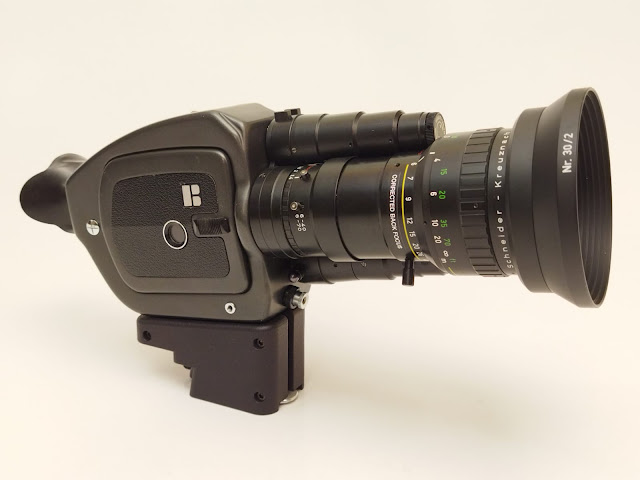
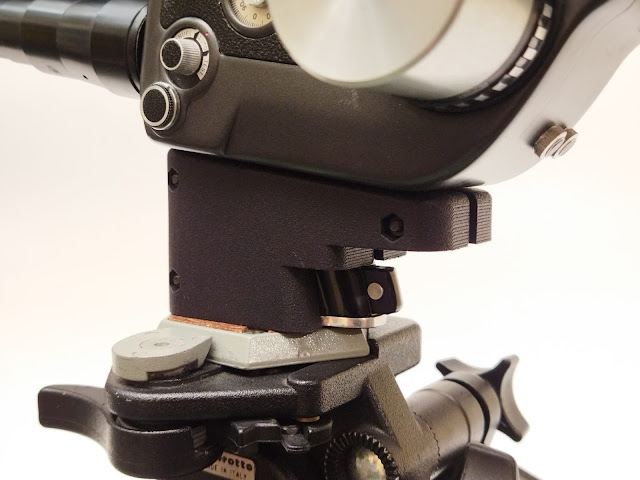
The result is a solid, functional support that respects the industry standard 85mm spacing between rod center and optical axis, with a tripod screw mount vertically centered under the lens, a fundamental fix for a major design oversight.

At the moment, only a prototype exists, which Sune is currently putting through rigorous field testing. If it passes — and all signs are promising — a limited production run will follow.

With this base, the Kodak Super 8 camera finally becomes a truly professional filmmaking tool, not just in price, but in practical, on-set functionality. And it’s thanks to the shared vision and expertise of two names who, within the passionate ecosystem of European Super 8, are helping to shape the format’s future.

NEW!!!DIGITAL VIDEO ASSIST FOR NIZO CAMERAS.

Even more impressive is the video-assist solution for Nizo cameras, with a highly useful feature: cartridge swapping without removing the video unit — a true innovation.

This version includes:

  • HD SDI video camera (1920x1080p) with dual 1/4″ threads.

  • Zoom lens f/1.4–2.8, 12 mm.

  • Adapter machined from technical plastic, with screws to fix the viewfinder and the camera body. 

  • The design permits opening the cartridge compartment while the video assist remains in place.  


  • Lens and body caps.

  • Allen key and spare screws.

  • Battery (Li-Ion, 12V, 9900mAh) with smart charger (100–240V, 50–60Hz, 1A, EU plug), mounted on a custom side plate designed to sit between the tripod and camera base. A screw allows mounting the battery on the camera grip when handheld. 


Each component also available separately:

  • Video camera.

  • Adapter ring.

  • Battery with charger


DIGITAL VIDEO-ASSIST FOR CANON XL-S CAMERAS

Among César's latest breakthroughs is a new video-assist system for Canon XL-S models, a remarkable solution for filmmakers seeking accurate framing and timing in live action shooting with Super 8.


The full kit includes:

  • HD SDI video camera (1920x1080p) with 1/4″ threads (top and bottom).

  • Zoom lens f/1.4–2.8, 12 mm.

  • Adapter machined from 6082 black anodised aluminium, which threads securely into the Canon viewfinder housing using six nylon-tipped screws that protect the surface.

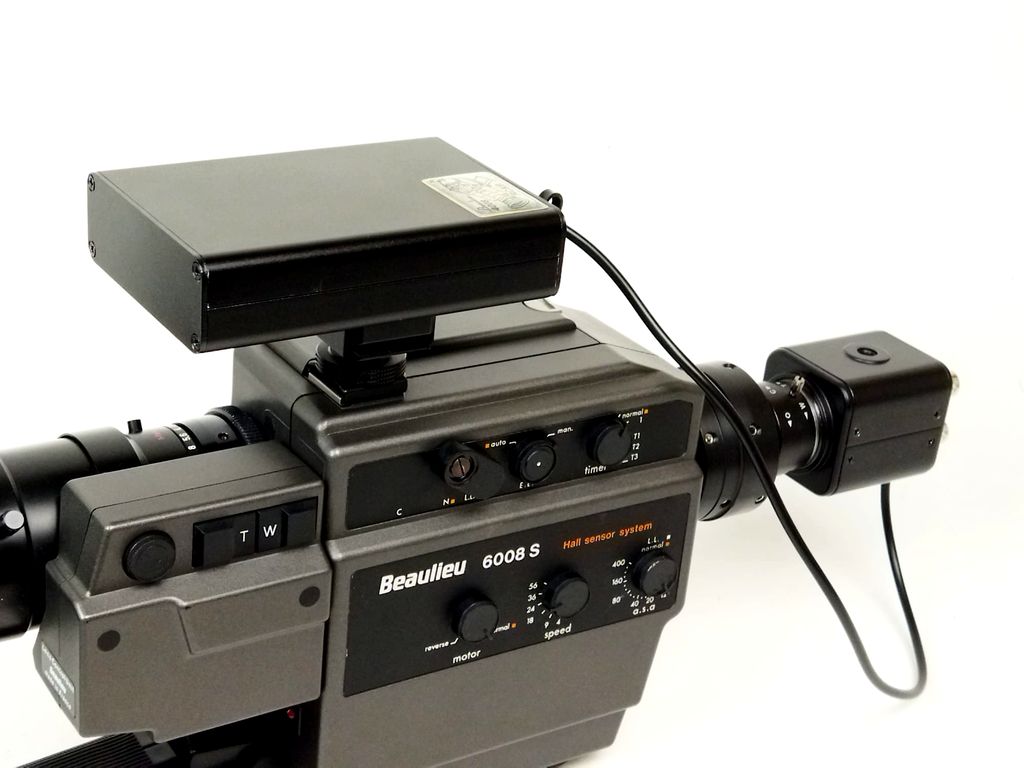
  • Battery (Li-Ion, 12V, 9900mAh) with smart auto-switching charger (100–240V, 50–60Hz, 1A, EU plug). The battery uses a quick-release V-mount with male cold shoe to attach directly to the camera’s top cold shoe.

  • Lens and body caps.

  • Allen key and spare screws.

Each item can also be ordered separately:

  • Video camera.

  • Adapter ring.

  • Battery with charger.


SPECIAL VIDEO ASSIST BATTERY, WITH DISCOUNT FOR CUSTOMERS.

Also noteworthy is the dedicated power system for video-assist users:

  • 12V Li-Ion battery (9900mAh) with charger and multiple mounting options.

  • Regular price: €239.

  • Discounted to €189 for existing customers (price difference refunded after payment).


Mounting options include:

  • Side plate between tripod shoe and camera.

  • Male cold shoe (for Canon XL-S, Beaulieu 6008/7008, or any female cold shoe system).

  • 1/4″ thread mount for cameras like ZC1000, Nizo 6080, Bauer 715XL, etc.

  • Clamp for 15 mm rods.

  • Optional Arri-style rosette with M6 thread.


César's video-assist systems are robust, precise, and designed with the filmmaker's practical needs in mind. And, as always, they come with that rare quality: made by someone who understands not only how the machines work, but what it means to use them to tell a story.

From Galicia, in the North West of Spain, I follow these developments with admiration... and gratitude.


lunes, 16 de mayo de 2022

NUEVO CONTROL REMOTO PARA EL ELMO GS1200

El Elmo GS1200 es el proyector de Súper-8 mas demandado del mercado mundial. Aunque no soy devoto de estas máquinas (pues para proyección confío mas en Fumeo y Beaulieu, para sonorización en el Fujicascope, en belleza me subyuga el Braun Visacustic 2000 y en cariño el Eumig 940 Processor), poseo tres unidades: para uso profesional, el Elmo GS1200 Xenón con brazos para 1.000 metros; el rarísimo Elmo GS1200 PCom, para sonorizaciones; y un Elmo GS1200 III, para proyecciones normales en el trabajo. 

El nuevo mando de control remoto CBD se agarra muy bien

El hecho de que exista tantos usuarios activos del GS1200 es la causa que aun hoy, mas de treinta años después de que saliese de fábrica la última máquina de este modelo, surjan especialistas que venden todo tipo de repuestos mejorados, así como accesorios. 

Hoy describimos el nuevo mando de Control Remoto para el Elmo GS1200, diseñado por el ingeniero barcelonés Anselm Vidal y fabricado, con los mejores materiales, por CBD (acrónimo de César Ballesteros Dominguez), que lo comercializa a través de su página Tested Super-8 Cameras (pulsar en el texto en azul para visitar la web). Anselm y César no son unos recién llegados al cine. Anselm desarrolla dispositivos desde sus tiempos de estudiante en los años sesenta, mientras que César fabrica desde hace unos cuatro  lustros: uno de los accesorios que mas satisfecho me dejó, comprado alrededor de 2010, fue un slider que no sólo incorpora intervalómetro ¡sino hasta contador de fotogramas!

Cómodo y bonito

BONITO DISEÑO, MAGNÍFICA CONSTRUCCIÓN.

Este nuevo mando de control remoto sorprende agradablemente por su bonito diseño, con el logotipo Elmo original, pero sobre todo por su ergonomía: se agarra y manipula con una sola mano, de forma más cómoda y lógica que el viejo original de Elmo, fabricado hace tres o cuatro décadas, mucho mas alargado y difícil de sostener mientras, por ejemplo, se está hablando al público al tiempo que se hace la proyección.

El mando de remoto original es menos ergonómico

Otra ventaja de esta nueva unidad de Control Remoto de CBD es el largo generoso de su cable: cinco metros en la versión normal, de 97 euros, pero que se puede encargar con otras longitudes (en mi caso, lo pedí con 9 metros).

Este mecanismo de control remoto está muy bien construido, con materiales de alta calidad, bajo una premisa contraria a la obsolescencia programada: el Control Remoto de CBD ¡durará mas que nuestra vida! 

El funcionamiento es muy lógico e intuitivo: botón inferior para el paro, botón derecho para marcha adelante y botón izquierdo para marcha atrás. Los pulsadores superiores son para la grabación en una o dos pistas de sonido.

Nuestra recomendación mas encarecida, pues, para este nuevo accesorio, tan útil, y a la vez tan esperado por los usuarios del Elmo GS1200 que, aunque no lo utilicen a menudo, harán bien en comprar uno, por si acaso, mientras dure la tanda de fabricación. Una buena inversión, a un coste moderado.

viernes, 13 de mayo de 2022

NEW BATTERIES FOR 16MM BEAULIEU CAMERAS

Beaulieu 16mm cameras are a beauty, the only 16 mm cameras than you can call it sexy. In Spain, the R16 model was very popular as it was used by many provincial correspondents of Televisión Española, then the only television station, for news filming. That beautiful photochemical world ended between 1981 and 1983 when TVE switched to inferior magnetic media: everything they saved on film was wasted on renewing the equipment that, every so often, became obsolete.

At IB Cinema, I have 3 Beaulieu R16 cameras from different eras. In 1986, Beaulieu introduces a revolutionary 16 mm model, the Beaulieu 2016, which is the jewel of the crown: silent motor, quartz-controlled speed, digital frame counter and built-in interval timer.

Photograph by my friend Dr. Chema Ríos using his state of art Leica camera

The Beaulieu's Achilles heel was its rechargeable batteries. This problem has now been professionally resolved, thanks to the TS8C firm which, following in the footsteps of the success of its Eneloop batteries for the legendary Beaulieu 4008 Super-8 model, now produces new batteries compatible with all 16mm Beaulieu models! They are 3800mA NiMH cells. 

These batteries are totally machined in aluminium, with stainless screews. Contact plñater are professionally made in one piece (not copper washers). Nothing of 3D printing here, only quality components and very high standar manufacturing process. 

The set comes with a smart autoswitching CE certified charged AC 100/240V, 50/60 Hz.

I have purchased a set of two and as I am very happy with the finish and performance,  I will now purchase another two.

A lot of 35 mm films in the background!

This new development has come just in time because, for reasons I will explain another day, the third of my Global Warming feature films has to be shot entirely with French equipment: Beaulieu cameras and Angenieux lenses. I'll be using my Beaulieu 7008 Pro, they are their rare Angenieux 6-90mm, a Beaulieu 2016 and a Beaulieu R16, with a range of Angenieux lenses including the amazing 5.9mm ultra wide angle.

The link to the website of TS8C , the manufacturer of these batteries, can be seen at the following link: CLICK HERE


Beaulieu R16 Automatic service and repair manual, courtesy of Adrian Cousins, IN THIS LINK


sábado, 2 de octubre de 2021

BEAULIEU 4008: TWO NEW IMPROVEMENTS TO ITS HAND-GRIP

The most iconic camera for the Super-8 is, without a doubt, the Beaulieu 4008. And it will continue to be so in the future as it has an advantage over other top models: it is very easy to repair, so the service, for the 4008 , is guaranteed not only for the next 5 years, but for another 5 decades. On the other hand, other top Super-8 cameras such as the Nizo Professional, the Leicina Special or the Canon 1014 XLS, brilliantly designed, have in their sophisticated electronics, now obsolete, the seed of its self destruction.

In addition to the beauty of its design and the ease of service, the Beaulieu 4008 also offers everything a professional Super-8 filmmaker can demand, such as  variable shutter and  interchangeable C-mount. One of the headaches, in the past, of this model, the rechargeable batteries, has been overcome long ago, with new generation batteries, such as the Eneloop from Panasonic.

For hand-hold shooting, without a tripod, as I do most of my filming, very happy with the ergonomic handgrip of my Fujica ZC1000 from Single-8, the Beaulieu 4008 had the problem, for me,  of its mini grip. 

Well, this problem is a thing of the past now, too: is in production, again, the extension of the hand-grip, which allows a more comfortable grip. In addition, it has a side tripod thread, useful for certain uses. However, its best feature is that, thanks to this new accessory, it is the now much more comfortable to shoot this camera hand-held, without a tripod. 


The original small hand-grip of the Beaulieu 4008 also compromises the camera when it comes to shooting with a tripod. This is not the case with the ZC1000, whose grip can be detached. This new tripod shooting accessory for the Beaulieu, never before available, dramatically improves the stability of the 4008. 

The new stabilizer accessory for tripod shooting  is installed around the original grip, oversizing it, making the filming now perfect. We've had to wait 50 years, but finally, someone has designed the ideal accesorie for the Beaulieu 4008. Best of all, it can also be removed in less than half a minute, 


The maker of this new two accesories for the Beaulieu handgrip can be reached here: TESTED SUPER-8 CAMERAS  . I´m customer from this company for more than 15 years!


viernes, 14 de mayo de 2021

RECUERDOS, UN NUEVO CORTOMETRAJE EN SÚPER-8

"RECUERDOS" rememora las reminiscencias de sus tres protagonistas sobre La Coruña ¡aunque uno de ellos es la primera vez que pisa la ciudad! ¿Cómo se puede recordar algo que no se vivió? ¿Acaso está Christopher Nolan implicado?

Marcos, con su Bolsey

El cortometraje, que se presenta hoy viernes 14 de mayo de 2021, ha sido rodado con tres cartuchos de Kodak Ektachrome 7294 ¡sin desperdiciar prácticamente ningún fotograma!

  • Post scriptum: durante el primer fin de semana tuvo 3.000 espectadores, que llegaron a 6.000 en su primera semana, desde diferentes IP; el 90 por ciento, vieron "Recuerdos" hasta el final. ¡Muchas gracias!

En realidad, el propósito de este rodaje fue probar tres cámaras y varios objetivos (suministradas por TESTED SUPER-8 CAMERAS ),   antes del rodaje de "Odisea en Groenlandia", sólo que como la película es algo tan caro en IB Cinema aprovechamos hasta las pruebas para crear algún pequeño opus como este.

Narrado en español, emplea ciertas palabras en "coruñés", hoy en desuso y casi olvidadas, como "sorcho" (recluta procedente de aldea) o "chavea" (que en La Coruña siempre se usó como femenino - cuando en castellano, es masculino-, para designar, en los años sesenta y setenta, a una novia o, más bien, "novieta" ocasional - con cierto derecho a roce recíproco-).

Bolsey: mas pequeña que un cartucho de Súper-8

"RECUERDOS" es una delicia para aquellos que aman La Coruña pero también enamora a los cineístas, no sólo por las cámaras con las que fue rodado (una Leicina Special, con el Optivaron 6-66 mm, el Cinegon 10 mm y el Leitz Elmar 90 mm), una Bauer A512 Mark II y una Fuji P2, sino, también, por las que aparecen con los tres protagonistas: una Fujica ZC1000, una Fujica P2 con ultragranangular Voigtlander y la cámara de cine mas pequeña del mundo, la buscadísima Bolsey, del tamaño de una cajetilla de cigarrillos y que funciona sin pilas, con un mecanismo de relojería. 

El compacto Leitz Elmar de 90 mm se comporta en la Leicina como un 600 mm

FICHA TÉCNICA DE "RECUERDOS"

Película Kodak Ektachrome de Súper-8

Metraje: 10 minutos

Elenco: Marcos J. Fernández Eimil, Javier Suárez y Alex López

Concebido, filmado y escrito por Ignacio Benedeti

Montaje: Alex López

Música: Benjamín Tissot

Revelado: Riccardo Pascucci

Telecine: Myron Lenensky (Cinepost)

Pistado: Alberto Vangelisti

Diapositiva de Pepe: José Luís Sanz Campaña

Cámaras suplidas por TESTED SUPER-8 CAMERAS

Aunque el cortometraje "Recuerdos" está concebido para ser visto proyectado con película, los que no tengan acceso a ello podrán verlo telecinado en el siguiente enlace:  

RECUERDOS from IB CINEMA Motion Picture Films on Vimeo.

¿CÓMO SE HIZO "RECUERDOS"?

Para un máximo aprovechamiento de la película disponible, la filmación se hizo a sólo 18 fotogramas por segundo, cámara en mano, con el uso ocasional de un unípode.  El montaje, artesanal, cortando y pegando la película positiva con moviola y empalmadora.  Tras el montaje, como es habitual, se añadieron las pistas magnéticas para el sonido, y en ellas se sonorizó, con una moviola sonora Goko, primero la música, luego los ruidos y por último la locución en superposición: ¡un error en la última fase significaba repetir las grabaciones de la música y los efectos!

La película terminada se telecinó en Estados Unidos, en CinePost,  y al archivo digital, antes de subirlo a Vimeo, Alex lo sometió a una pequeña postproducción, como, por ejemplo, borrarle casi todas las marcas de los empalmes.

Proceso de la locución con moviola: 

MEMORIAS SOBRE TONECHO:

Tonecho, antes de tener el establecimiento de la Plaza de España, empezó en los postguerra en un quiosco en la esquina de las calles San José, La Torre, enfrente de donde se encuentra actualmente la confitería París. Posteriormente se instaló en un pequeño local en los bajos del número 2 de San José: recién estrenada la película “ Lo que el viento se llevó”, el viento efectivamente le tiró el puesto y unos cachondos le pintaron “ lo que el viento se llevó”. Por último pasó a instalarse al local que ocupó por décadas en el mirador de San Roque, con frente a la plaza de España.

jueves, 7 de enero de 2021

TESTED SUPER-8 CAMERAS: VERY GOOD AFTER SALES SERVICE.

I have had my Beaulieu 4008 camera from TESTED SUPER-8 CAMERAS for a year now. I have not bought anything in all this time.  But the owner, César Ballesteros, has had the cortesy to send me a gift for the Epiphany, a badge, beautifuly made,  with the Beaulieu camera, without having to do it, because, for the moment, I am not buying anything. But with this small detail, he has made me happy. This is a good customer service! Thank you, César.

I just went to see the website TESTED SUPER-8 CAMERAS and I see, with surprise, that, in addition to the Beaulieu 4008, he also has, among other cameras, two authentic wonders completely serviced: the Leicina Special and my favorite the Bauer A512 Mark II Egido version, with manual ASA speed selector, LED light for aperture indicator and  lock for the EE meter with fast buttom, at very affordable price. Whit a camara like this, I have filmed in the Arctic an 80 minutes feature for Galician television.

César, although he now lives in Norway, I met him personally more thant 15 years ago. From his formerly company, CBD, I bought several devices that have given me nothing but satisfaction during all this years, such as a motorized slider that includes an intervalometer with a frame counter.

Note: I have no personal relationship with César and his small company. I simply try to make my experience useful to others.

Trailer with English subtitles of my feature, shot with my Bauer A512 Mark II: 

SPITSBERGEN O GARDIÁN DO ÁRTICO, trailer with English subtitles from IB CINEMA Motion Picture Films on Vimeo.